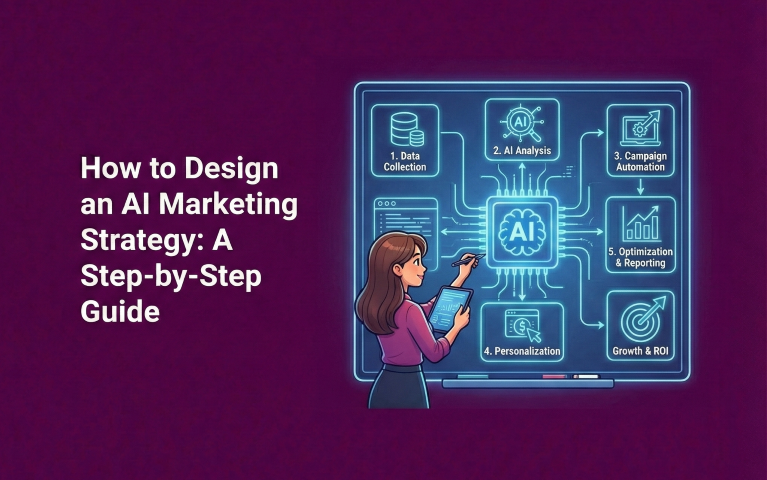
How to Design an AI Marketing Strategy: A Step-by-Step Guide for Smarter Growth, Automation & ROI
Artificial Intelligence has become the backbone of modern digital marketing. In 2026, businesses that leverage AI effectively are outperforming competitors in personalization, automation, targeting, and ROI. From predictive analytics to AI-powered advertising and chatbots, AI enables marketers to make faster, smarter, and more data-driven decisions.
This comprehensive guide explains how to design an AI marketing strategy using a clear 7-step framework and how Kardhar Infotech helps businesses implement AI-driven marketing strategies that deliver measurable results.
1. Understand AI Marketing & Its Business Impact
Before implementing AI, businesses must understand what AI marketing truly means. AI marketing involves using technologies like machine learning, predictive analytics, and automation to analyze customer data, predict behavior, and optimize marketing activities.
AI marketing helps businesses:
- Understand customer intent and behavior
- Deliver personalized experiences at scale
- Improve marketing efficiency and accuracy
- Reduce manual work and operational costs
Understanding this foundation is the first step in learning how to design an AI marketing strategy that aligns with real business needs.
2. Define Clear Marketing Goals & Success Metrics
AI is powerful, but without defined goals, it can waste time and budget. Every AI marketing strategy must start with clear objectives aligned with business growth.
Common AI marketing goals include:
- Increasing qualified leads
- Improving conversion rates
- Enhancing customer engagement
- Boosting retention and lifetime value
- Optimizing marketing spend
Along with goals, businesses must define KPIs such as conversion rate, ROI, customer acquisition cost, and engagement metrics. Kardhar Infotech helps businesses set realistic, data-driven goals for AI marketing success
3. Build a Strong Data Foundation
Data is the fuel of AI marketing. Without accurate, clean, and structured data, AI tools cannot generate meaningful insights.
Key data sources include:
- Website analytics and user behavior data
- CRM and customer databases
- Social media engagement insights
- Email marketing performance data
- Sales and transaction history
Organizing and cleaning this data ensures AI models can predict trends accurately. A strong data foundation is essential when mastering how to design an AI marketing strategy that delivers consistent results.
4. Select the Right AI Tools & Marketing Platforms
Choosing the right AI tools determines the effectiveness of your strategy. Not all tools serve the same purpose, so selection must be goal-driven.
Popular AI marketing tools include:
- AI-powered CRM systems
- Marketing automation platforms
- Predictive analytics and BI tools
- AI content and SEO tools
- Programmatic advertising platforms
Kardhar Infotech evaluates business needs and recommends scalable AI tools that maximize performance and ROI.
5. Implement AI-Driven Personalization & Automation
Modern customers expect personalized experiences. AI enables real-time personalization and automation across marketing channels.
AI-powered personalization and automation include:
- Dynamic website content based on user behavior
- Personalized email campaigns and recommendations
- Automated lead nurturing workflows
- Smart ad targeting and bid optimization
These capabilities significantly improve engagement and conversions, making personalization a core pillar of how to design an AI marketing strategy in 2026.
6. Integrate AI Across Content, SEO, PPC & Customer Support
AI marketing works best when integrated across all digital channels rather than used in isolation.
AI integration supports:
- Content ideation, optimization, and performance prediction
- SEO keyword research and ranking analysis
- PPC campaign optimization and budget allocation
- AI chatbots for 24/7 customer support and lead qualification
Kardhar Infotech builds unified AI marketing ecosystems that ensure consistent messaging and higher ROI across channels.
7. Measure Performance, Learn & Continuously Optimize
AI marketing is not a one-time setup—it requires continuous learning and optimization. AI analytics tools provide real-time insights into campaign performance.
Key metrics to track include:
- Conversion and engagement rates
- Customer acquisition cost
- Marketing ROI
- Customer lifetime value
By continuously analyzing data and optimizing campaigns, businesses stay competitive and future-ready. Kardhar Infotech provides ongoing AI monitoring, reporting, and optimization to ensure long-term success.
Final Thoughts: How to Design an AI Marketing Strategy That Delivers Results
Designing an effective AI marketing strategy requires the right balance of technology, data, and human expertise. By following this 7-step framework, businesses can unlock smarter automation, better personalization, and higher ROI.
If you want to implement AI marketing successfully in 2026, partner with Kardhar Infotech—your trusted digital marketing and AI strategy expert.